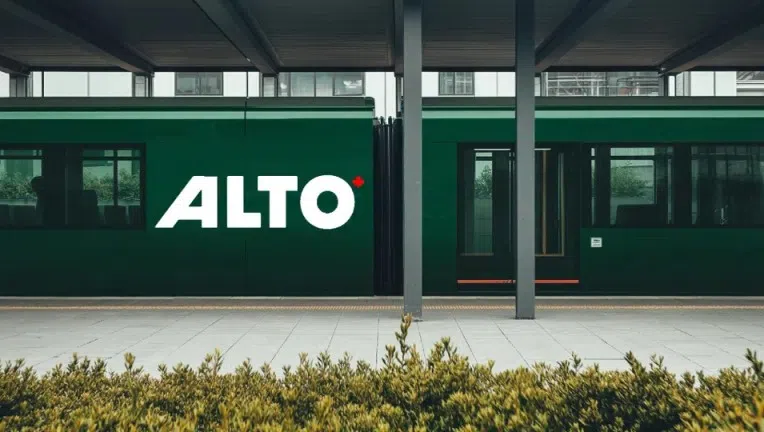
Photo courtesy: Alto
A rail advocacy group is questioning the projected cost and ridership of the federal government’s proposed ALTO high-speed rail project, arguing the plan could be significantly more expensive and attract fewer passengers than expected.
The Coalition for Better Rail released a report that applies “reference-class forecasting,” a method that compares project forecasts against the performance of similar rail projects around the world.
According to the report, the ALTO project could ultimately cost about $143 billion, with a worst-case scenario approaching $200 billion. That’s well above the project’s current published estimates.
The report also suggests annual ridership could reach about nine million trips by 2055, compared with ALTO’s projection of 24 million.
“Every big rail project says it’s the exception. The data says otherwise,” said Coalition spokesperson Dr. Andrew Hyett. “Canadians deserve a plan that’s been tested against reality, not one built on hope.”
Rather than high-speed rail, the coalition is promoting what it calls High Performance Rail, which would operate trains at speeds of up to 200 kilometres per hour while making greater use of existing rail and highway corridors.
The group argues the approach would reduce construction costs and risks while improving both passenger and freight rail service by separating the two onto dedicated tracks.
“We’re not saying do nothing. We’re saying build what the evidence supports,” Hyett said.
The Coalition for Better Rail describes itself as an independent advocacy group promoting evidence-based investments in passenger and freight rail infrastructure.