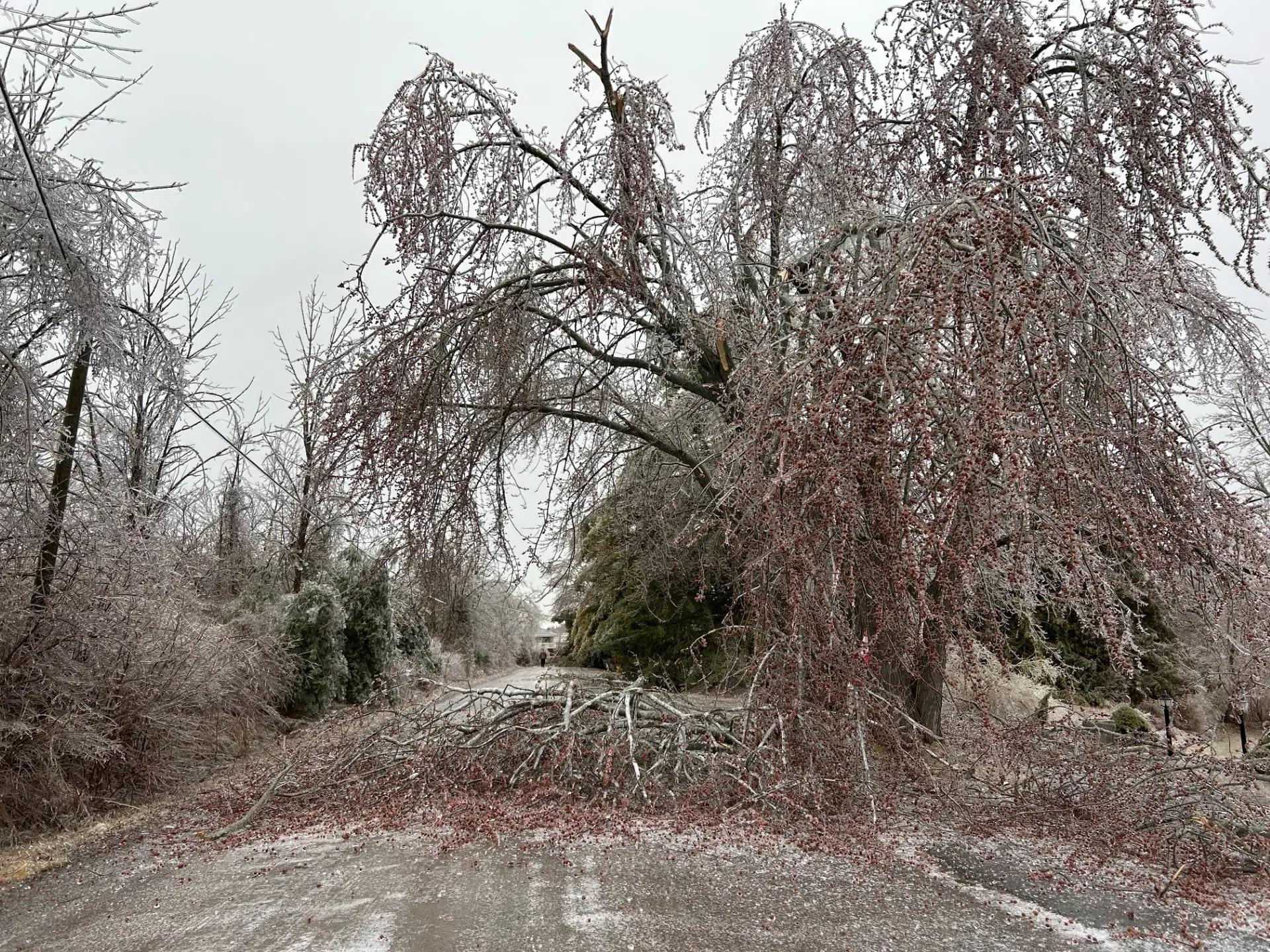
With several storms hitting southern Ontario this winter and many more weeks of harsh weather still to come, residents of Northumberland County are being reminded to assess the condition of trees on their properties and take appropriate steps to support recovery and safety.
Ice storms and heavy snow can cause significant damage to trees, including loss of branches, split trunks, and bent stems. These impacts can weaken trees, making them more vulnerable to insect infestations, disease and further damage during future weather events. Recovery will depend on the initial health of each tree and the severity of the damage.
Local landowners are advised to begin by assessing tree health when it is safe to do so. Look for damaged limbs, bent stems and signs of significant crown loss. Trees that lose less than half their upper branches may recover well with proper care, while more severe damage may require professional evaluation. For safety reasons, avoid working near hanging limbs or around downed power lines, and consider consulting a certified arborist for hazardous trees or complicated repairs.
Heavy branch removal and major pruning are best left to trained professionals. In many cases, it is recommended to wait until spring or fall for planned pruning, allowing trees greater resilience and reducing stress from cutting during the coldest part of winter. Letting ice melt naturally rather than trying to force ice off branches can also help prevent further damage.
Taking steps now to monitor and manage tree health can help Northumberland County residents protect their properties and landscapes throughout the remainder of winter and into the growing season. Local municipal guidelines may apply for trees on public land, and residents should follow all safety and community regulations when planning tree care.
(Written by: Joseph Goden)